

Jiu-Jitsu vs Team Sports: What Makes BJJ Different for Kids
Team sports teach real, valuable lessons — but they also let a kid get lost in the crowd. Jiu-jitsu's belt system and individual pacing offer something team sports structurally can't.
This isn't an argument that jiu-jitsu is better than soccer, baseball, or basketball — team sports teach cooperation, shared responsibility, and how to celebrate someone else's success, and those are lessons worth having. But parents comparing options for their kid are usually trying to understand what's actually different about jiu-jitsu, not just whether it's "good for kids" in the abstract. The honest answer is that BJJ is structured around the individual child in a way that most team sports simply aren't, and that structural difference shows up in a few specific places.
The problem with getting lost in the crowd
On a team of twelve kids playing soccer, a coach's attention is necessarily split. A quieter or less naturally athletic child can spend an entire season on the periphery — showing up, participating, but never getting more than a few seconds of individual correction in any given practice. That's not a knock on team sports coaches, who are managing a genuinely difficult group dynamic. It's just a structural reality of coaching many kids at once around a single ball.
In a jiu-jitsu class, a child is still training among peers, but the format is built around partner work and small-group drilling. A coach circulating the room during partner drills gives individual correction constantly — adjusting a grip, fixing a hip angle, calling out a kid by name to demonstrate something they just improved on. It's much harder for a child to disappear into the background of a jiu-jitsu class than it is on a twelve-person sports team.
The belt system: progress that's yours alone
Team sports generally measure success collectively — did the team win, did the team make the playoffs. That's meaningful, but it also means an individual child's personal development can get tied up in outcomes they don't fully control, like a teammate missing a play or a referee's call. Jiu-jitsu's belt and stripe system works differently: a child's progress is tracked against their own growth, not a scoreboard. Advancement reflects what that specific kid has learned and can now do, on their own timeline.
This matters especially for kids who are naturally quieter or slower to develop physically. In a team sport, that child might spend a season on the bench. In jiu-jitsu, that same child is still training every technique, still getting reps, and still progressing toward their next stripe at a pace that reflects their own effort — not their draft position on a roster.
- Every child gets hands-on correction, every class, not just when the ball comes their way
- Progress is measured against a child's own growth, not team outcomes
- A quieter or newer kid can't get lost on the bench — everyone is drilling, every class
- Competition, when a family chooses it, is optional and individually paced
Both have real value — the question is fit
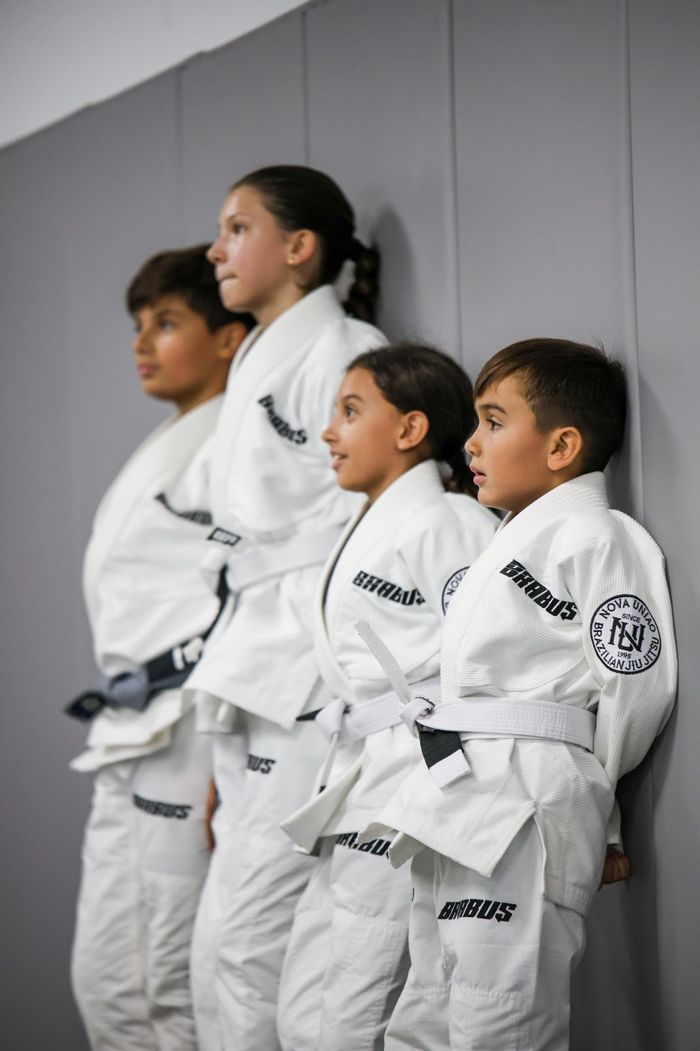
None of this means team sports are the wrong choice, or that a family has to pick one or the other. Plenty of Brabus students also play baseball, soccer, or travel basketball, and the two experiences complement each other well. Team sports teach a child to subordinate their individual performance to a group goal, to celebrate teammates, and to handle the specific disappointment of a shared loss. Jiu-jitsu teaches a child to take individual ownership of their own progress, to get comfortable being personally corrected in front of others, and to measure success by their own improvement rather than a final score.
For a child who thrives on personal attention and steady, visible progress — or for a quieter kid who tends to fade into a team roster — jiu-jitsu's individually paced structure can be exactly the missing piece. For a highly social child who loves the camaraderie of a locker room, team sports might be the bigger draw. Many families find the two aren't competing at all, but genuinely complementary.
See the individual-pace difference for yourself — explore the Kids & Teens program or book a free trial class at Brabus Academy.
Come find out what you're made of.
No experience required. No commitment. Just step on the mat.
Start Free Trial