


A Decade in the UFC: Léo Santos's Lightweight Run
Nine years, seven UFC wins, and two Performance of the Night bonuses — Léo Santos's lightweight career is a case study in what happens when world-class jiu-jitsu meets complete mixed martial arts.
Winning a reality-TV tournament earns a fighter a UFC contract. Staying on the UFC roster for nearly a decade is a completely different achievement, one that has nothing to do with a single good camp or a hot streak and everything to do with durability, adaptability, and a game that holds up against a constantly rotating cast of world-class opponents. Léo Santos did both. From 2013 to 2022, he built a career as a UFC lightweight that stands as one of the more underrated technical runs in the division's history.
The numbers behind the run
Santos's UFC record closed at 7-3-1, part of an overall professional MMA record of 18-6-1. Those aren't the gaudy, highlight-reel numbers that generate headlines on their own — they're the numbers of a fighter who spent years inside one of the deepest, most talent-stacked divisions in the sport, and who kept getting matched against legitimate, live competition fight after fight. Longevity in the UFC lightweight division isn't handed out. It's earned one performance at a time, against opponents who are actively trying to end a career, not pad a record.
Two Performance of the Night bonuses
Along the way, Santos earned two UFC Performance of the Night bonuses — recognition reserved for the standout finishes and performances on a given card. Bonuses like that don't come from surviving; they come from imposing a style decisively enough that the promotion itself singles the performance out. For a grappling-based fighter, a Performance of the Night usually means a finish built on exactly the kind of technical precision that made Santos a world champion years earlier — pressure, control, and a finishing sequence that the opponent simply couldn't escape.
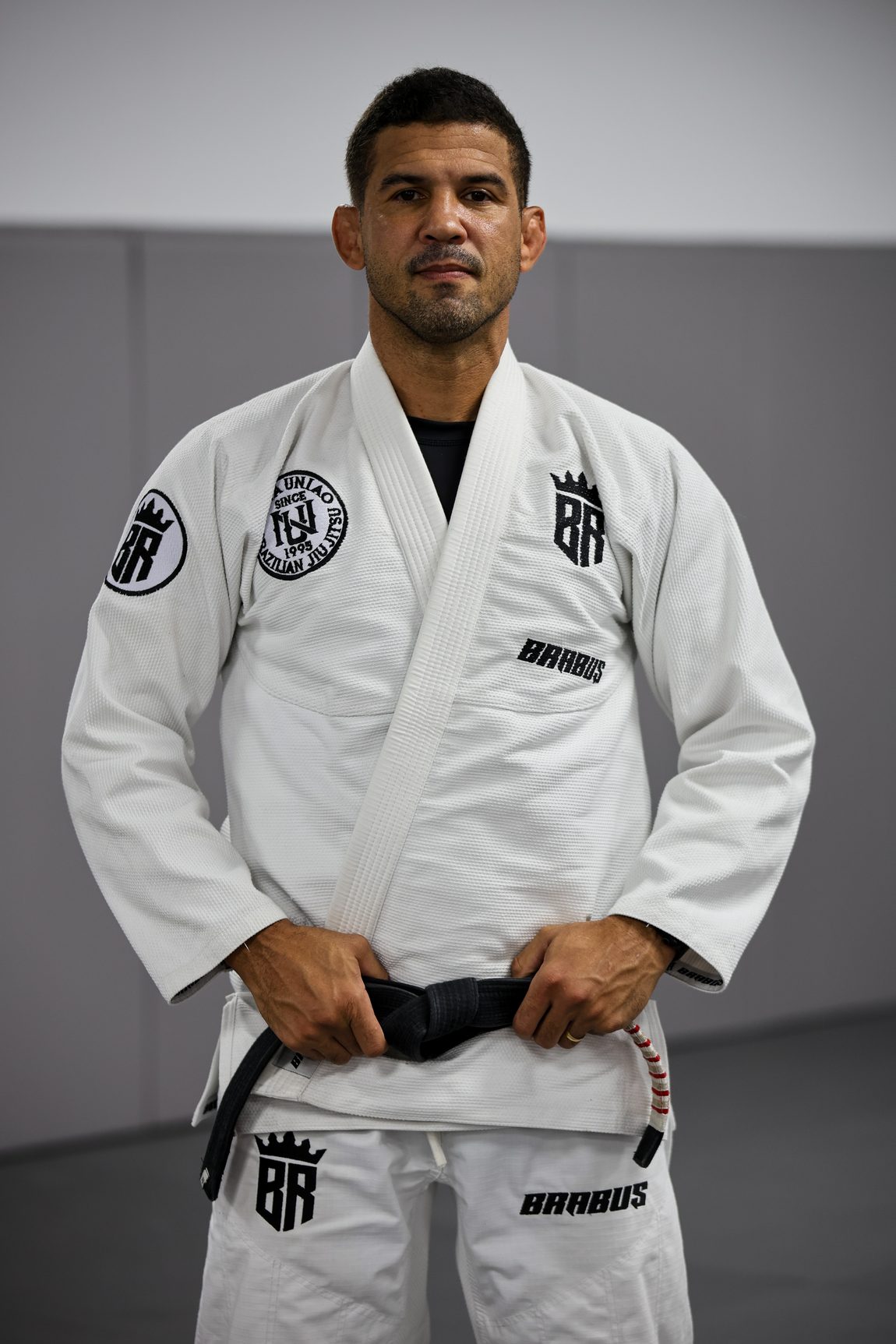
Fundamentals under the brightest lights
What makes Santos's UFC run particularly meaningful for anyone training jiu-jitsu today is what it proves: fundamentals hold up. He didn't reinvent his game once he got to the UFC. He brought the same base — built starting at age four, refined across seven world titles and an ADCC career — into a sport with far fewer rules and far higher stakes, and that base kept working. Across nearly a decade of five-round fight camps, elite strength and conditioning programs on the other side of the cage, and opponents who studied him relentlessly on film, the jiu-jitsu itself never stopped being the difference-maker.
A career that spanned an era of the sport
Nine years is a long time in any combat sport, but it's an especially long time in the UFC lightweight division, which cycled through multiple generations of contenders and champions during Santos's tenure. Staying relevant, staying booked, and staying competitive across that much change requires a fighter who is still evolving even as the sport around him evolves. That's a different kind of achievement than a short, explosive run to a title — it's proof of a game built to last.
Retiring on his own terms
Santos retired from competition in 2022 to coach full-time — a decision that closed out a two-decade competitive career spanning gi jiu-jitsu, no-gi grappling, and mixed martial arts. He didn't fade out; he stepped away deliberately, at a point where he could turn his full attention to passing that same foundation on to the next generation of students. Today, that decade of UFC experience is one more layer of what he brings to the mat every day as head coach and co-founder of Brabus Academy in Lake Mary, Florida.
Want the complete picture, from age four to the UFC and beyond? Read Léo Santos's full founder story, or train under the coach who lived it — your first class at Brabus is on us.
Come find out what you're made of.
No experience required. No commitment. Just step on the mat.
Start Free Trial