


From Age Four to World Champion: Léo Santos's Path in Jiu-Jitsu
Most black belts started jiu-jitsu as adults. Léo Santos started as a preschooler — and the two decades that followed turned him into one of the youngest world champions the sport has ever produced.
Jiu-jitsu resumes tend to start with a discovery story — someone found a gym in their twenties, got tapped out on day one, and fell in love with the puzzle. Léo Santos's story doesn't have that beat. He was four years old when he began training under Wendell Alexander, a co-founder of Nova União, the Rio de Janeiro system that would go on to shape some of the most decorated fighters and grapplers to come out of Brazil.
A childhood built on the mat
There's a meaningful difference between learning jiu-jitsu as an adult, layering technique on top of a fully formed body and a fully formed set of habits, and growing up inside the art from early childhood. For Léo Santos, positions, escapes, and submissions weren't something he studied later in life — they were part of how he grew up. Under Wendell Alexander's instruction, and inside the culture of a team that took technical development seriously from the very beginning, Santos built the kind of foundation that most competitors spend years trying to retrofit as adults.
Rising through Nova União
Nova União's reputation as one of Brazil's great martial arts factories wasn't built by accident, and Santos grew up in the middle of that environment — training alongside and under people who expected excellence as the baseline, not the goal. That environment matters more than any single technique. Years of daily rounds against serious training partners, under coaches who had themselves competed at the highest level, is what turns raw repetition into real skill.
Becoming a world champion — young
By the time Santos reached black belt, he wasn't just competent — he was, by the numbers, one of the youngest BJJ World Champions in the history of the sport. That distinction is worth sitting with. The IBJJF and CBJJO black belt divisions are stocked with grapplers who have trained for fifteen, twenty, sometimes thirty years. Reaching the top of that field at a young age doesn't happen through talent alone — it happens when exceptional talent meets an exceptional number of hours on the mat, starting decades earlier than almost anyone else in the room.
Seven world titles, one enduring standard
The championship that came young was only the beginning. Across his competitive career, Santos accumulated seven world-level titles, including four consecutive CBJJO World Cup championships in 2002, 2003, 2004, and 2005 — a run in which he went undefeated in that event for over five years. He also stood on the podium at the IBJJF World Championship at black belt, taking silver in 2001 and bronze in 2000, cementing his place among the sport's elite competitors during one of its most competitive eras.
What the early start actually built
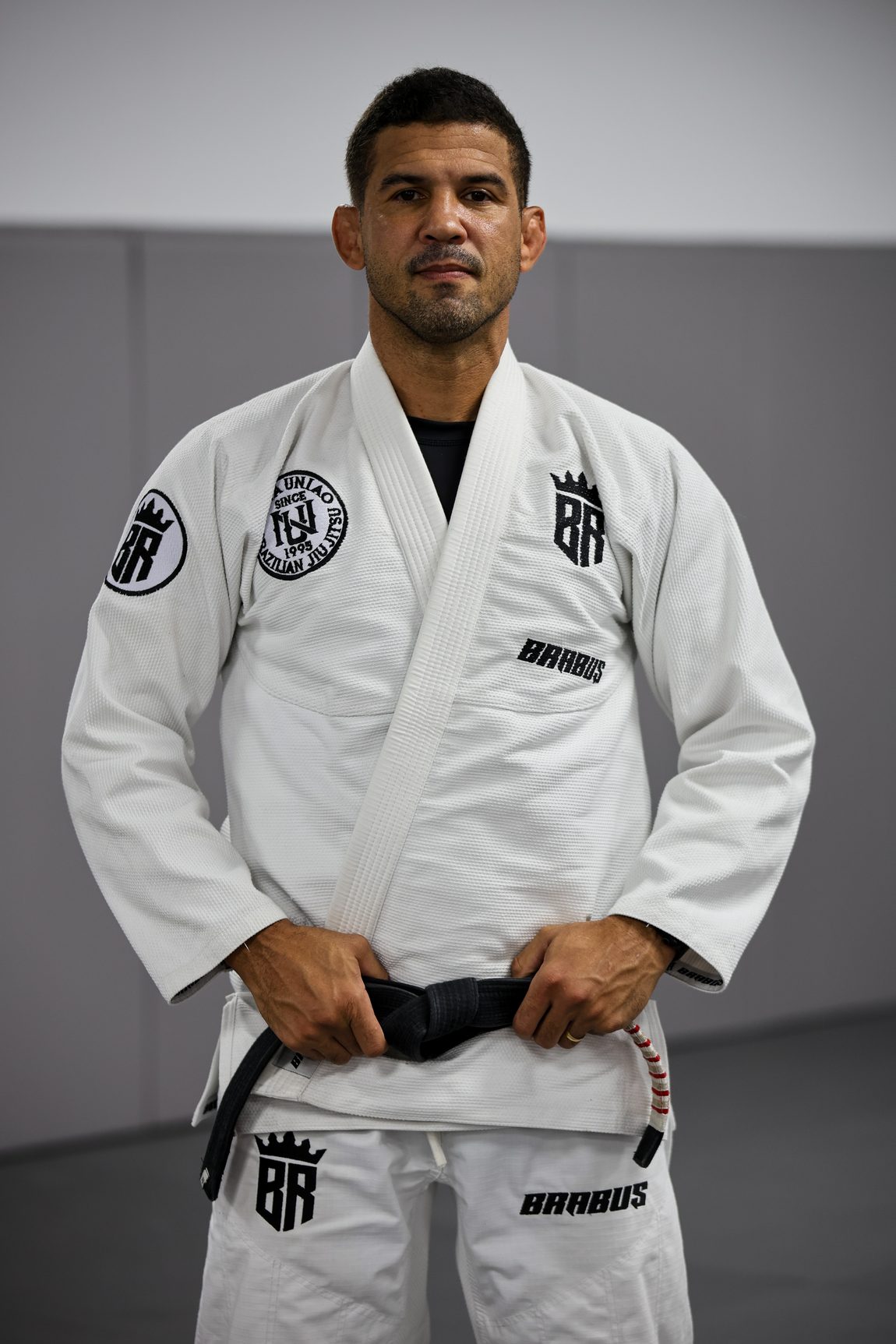
It's tempting to reduce a story like this to raw numbers — titles, years, medals. But the more useful lesson for anyone stepping onto a BJJ mat for the first time isn't the scoreboard, it's the process behind it: technical fundamentals absorbed early, reinforced constantly, and never abandoned even after the trophies started arriving. That is precisely the model Santos now teaches as head coach of Brabus Academy in Lake Mary, Florida, where the same attention to detail that built a four-year-old into a world champion now shapes every class on the schedule, regardless of a student's age or experience level.
Want the fuller picture of the man behind the titles? Read his full founder story, or come feel what that coaching actually looks like in person — your first class at Brabus is on us.
Come find out what you're made of.
No experience required. No commitment. Just step on the mat.
Start Free Trial