


Why Training Under World Champions Changes Your Jiu-Jitsu
Anyone can call themselves an instructor. Very few people have had their jiu-jitsu tested against the best competitors on the planet — and survived that test.
Every jiu-jitsu academy will tell you their instructors are qualified. Far fewer can point to a resume that includes actual world championship gold, medals earned against the deepest fields of competitors the sport produces. That distinction sounds like a small detail. In practice, it changes almost everything about what happens when you step on the mat.
A generic instructor teaches what they were told
Most martial arts instruction, at its weakest, is a game of telephone. An instructor teaches a technique the way they learned it, without ever having to defend that technique against a training partner who is actively trying to make it fail in real time. Over years, small errors compound. Details get dropped because nobody was ever forced to notice they mattered. The result is technically "correct" instruction that quietly doesn't hold up under real pressure.
A world champion teaches what actually works
Competing at the world level requires something a generic curriculum cannot fake: your technique has to survive contact with someone who has trained just as hard as you, who knows exactly what you're trying to do, and who is actively trying to stop you from doing it. Every detail that world-class competitors teach has already been filtered through that pressure. Léo Santos didn't become a seven-time world jiu-jitsu champion by memorizing technique — he became a champion because his execution of that technique held up against the best grapplers in the world, repeatedly, on the biggest stages the sport has. When he teaches a detail in class, it isn't theory. It's a detail that has already been proven under fire.
The same is true on the striking side
José Aldo built his reputation as one of the most dominant champions in UFC history, but that story starts with the grappling foundation he built at Nova União under André Pederneiras long before he ever fought professionally. A fighter who reaches that level has been forced to close every gap in their game — because at the championship level, opponents find and exploit any weakness that exists. Training under someone who has actually lived through that process means learning a version of jiu-jitsu with the guesswork already removed.
- World-level competition forces techniques to be tested against training partners actively trying to defeat them
- Instructors who competed at that level teach details that have already survived real pressure — not just theory
- Léo Santos's seven world titles and José Aldo's UFC dominance both reflect that same tested foundation
- Students benefit from that filtering process from their very first class, without needing years to discover it themselves
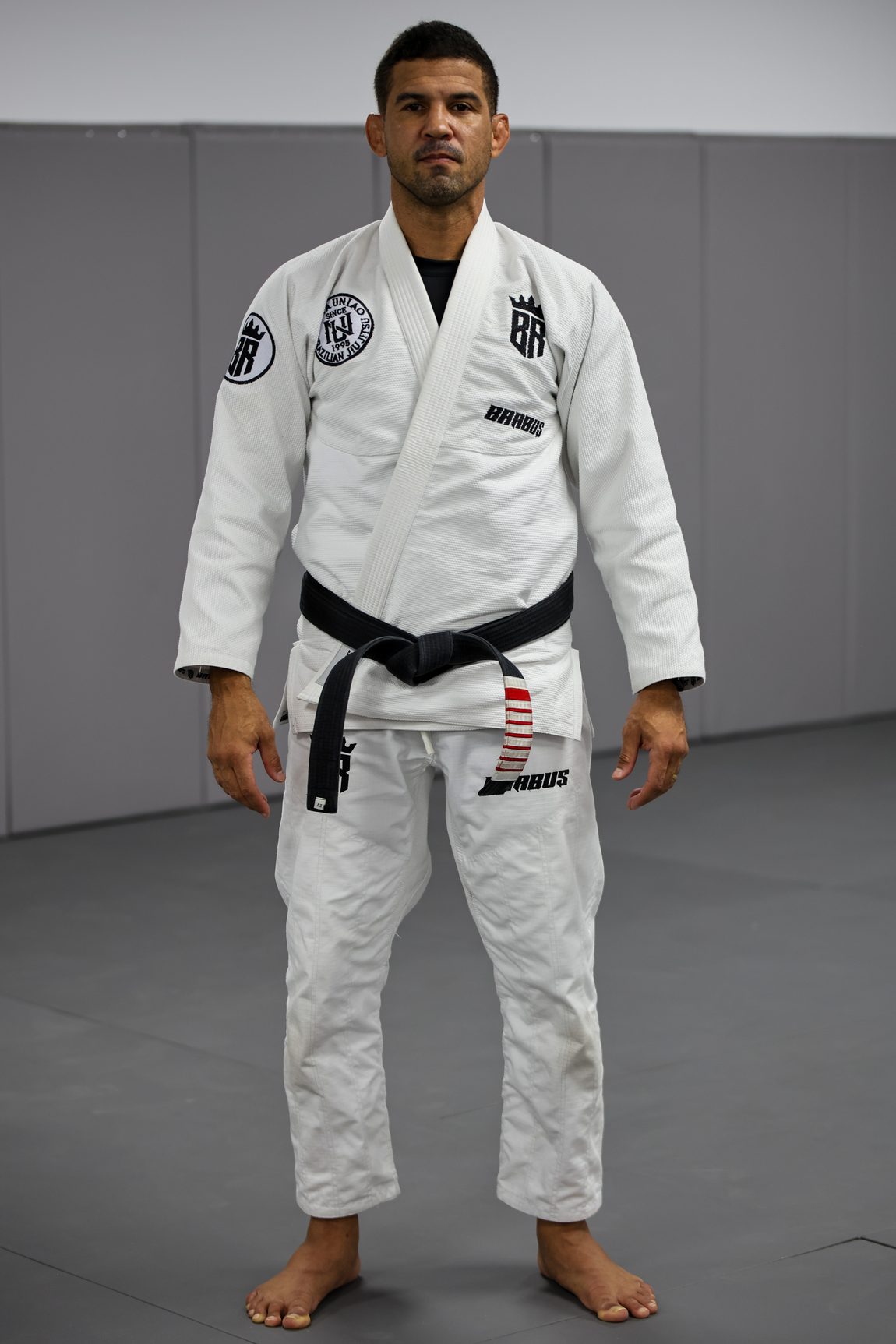
What this looks like in an actual class
The difference shows up in small, practical ways. A world-class instructor can tell you not just what a technique looks like, but why a common variation fails against a strong opponent, because they've felt that failure themselves at the highest level and had to fix it. They can spot the exact millimeter where your grip is loose or your hip is a beat late, because their own game had no room for that kind of error when they were competing for world titles. That kind of correction accelerates a student's progress in a way that generic instruction simply can't match.
It shapes the whole culture of the room
Training under instructors who competed at the top also changes the standard for everyone else on the mat — not through intimidation, but through example. When the coaching staff has personally lived the discipline required to reach world championship level, that same respect for detail, effort, and pressure-tested technique becomes the baseline for the entire academy, from the competition team down to a student on their very first day.
That standard is exactly what José Aldo and Léo Santos built Brabus Academy to carry forward. Read more about Léo Santos's journey to world champion, or come train under it yourself — your first class at Brabus is free.
Come find out what you're made of.
No experience required. No commitment. Just step on the mat.
Start Free Trial