

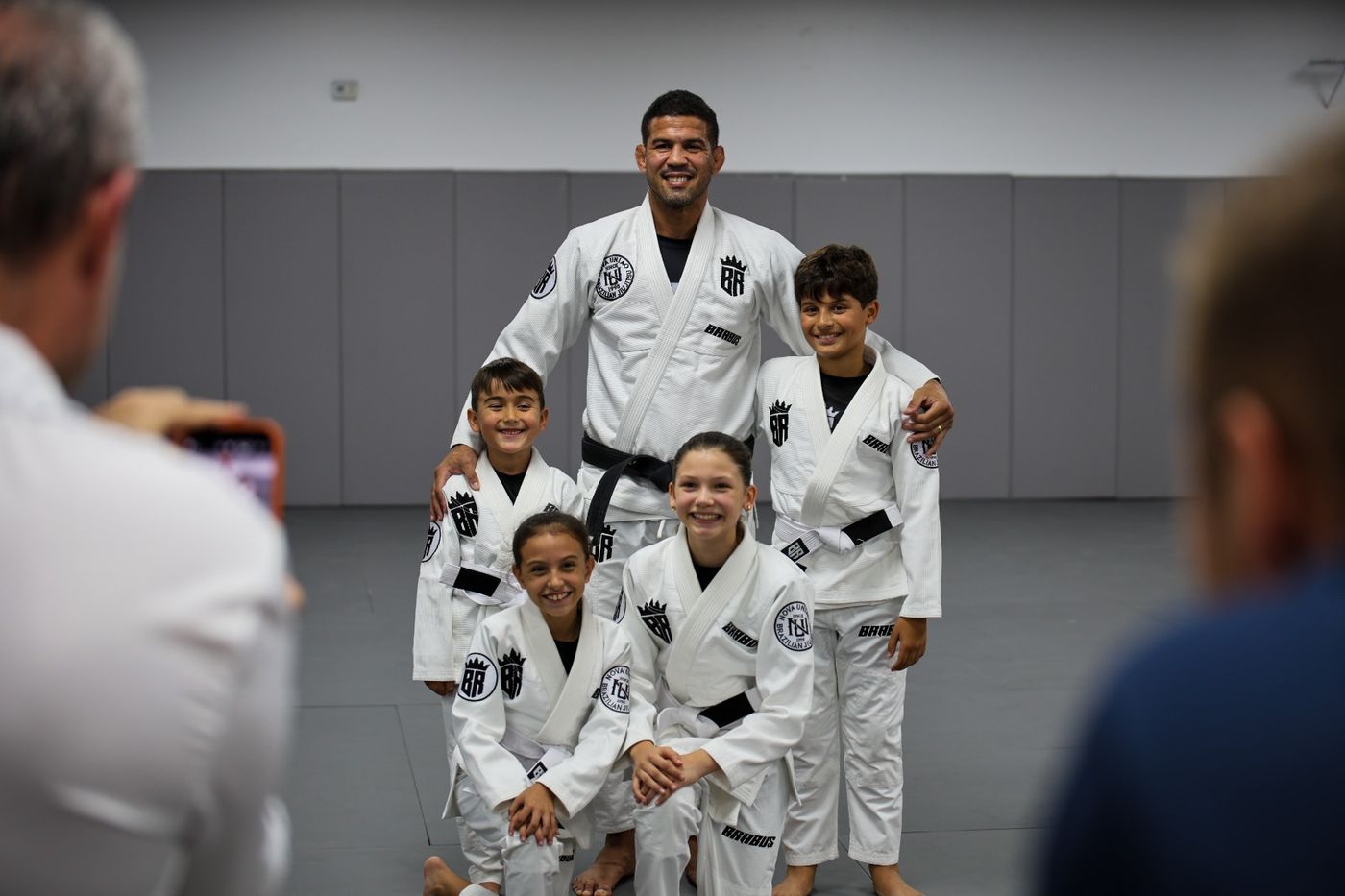
Trading Screen Time for Mat Time: Why Parents Are Choosing BJJ
Phones, tablets, and gaming consoles aren't going away, and no parent needs another lecture about screen time. But more families are looking for something that pulls kids fully off the screen a few times a week — and jiu-jitsu keeps coming up as a real answer.
Most parents today are navigating a genuinely new problem. Screens are woven into school, socializing, and entertainment in ways that weren't true a generation ago, and outright banning them isn't realistic or even desirable for most families. The more common approach is trying to build in real counterweights — activities that pull a child fully into a physical, social, offline space on a regular basis. That's where a lot of parents land on jiu-jitsu, not because it's anti-technology, but because of what it offers that a screen structurally cannot.
A screen can't ask you to pay attention with your whole body
Scrolling, gaming, and watching video all happen with a mostly still body and a highly reactive mind — quick hits of stimulation, low physical engagement. A jiu-jitsu class asks for the opposite: a child has to be fully present, physically and mentally, because a training partner is relying on them to pay attention. There's no passive mode in a live drilling round. Pediatric health guidance has long emphasized that kids benefit from regular physical activity that gets them moving and engaged, and jiu-jitsu delivers that in a concentrated, structured hour rather than leaving it to chance.
In-person connection that isn't mediated by anything
A lot of kids' socializing now happens through a screen — texting, group chats, watching the same streamer together while physically apart. None of that is inherently bad, but child development experts generally agree that face-to-face interaction, reading body language, and navigating real-time social dynamics in person are skills that need regular practice to develop well. A jiu-jitsu class is unmediated, in-person interaction for 45 to 60 minutes: reading a partner's movement, communicating without a screen in between, being physically present with peers and a coach. It's a category of social experience that's becoming rarer in a lot of kids' weeks, simply because so much else has moved online.
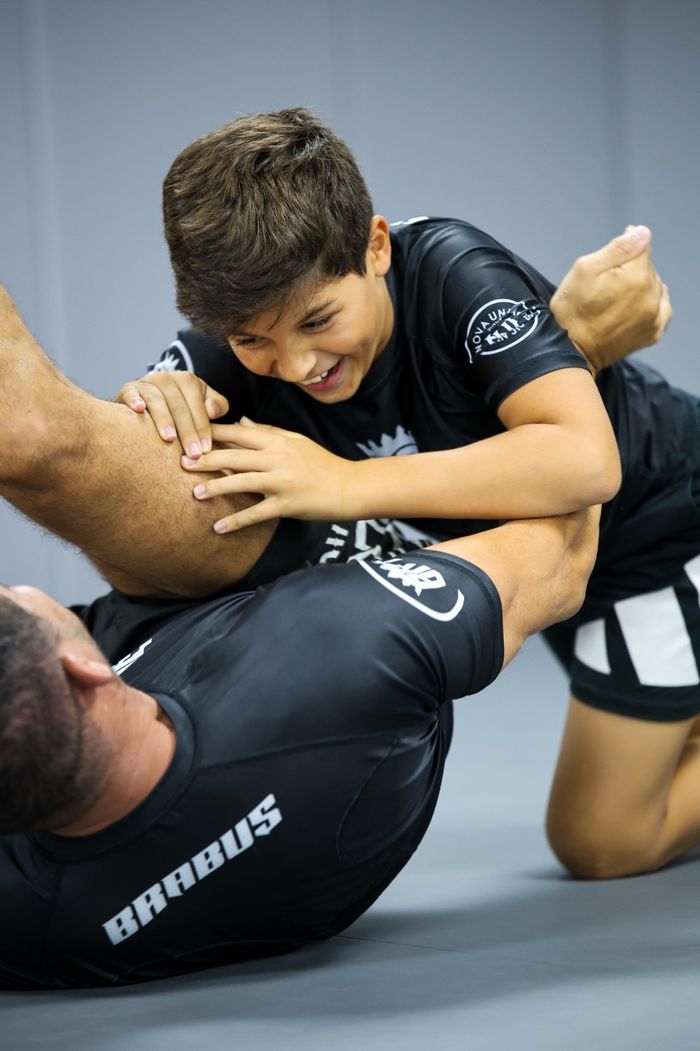
A genuine outlet for restlessness and energy
Many parents notice that a child who's spent hours on a screen becomes noticeably more irritable or restless — a pattern that makes intuitive sense, since screen time is typically low on physical movement even when it's high on mental stimulation. Jiu-jitsu offers a direct outlet: real physical exertion, a clear structure, and a natural endpoint (the class ends, everyone bows out) that gives a child's evening a healthy rhythm. Parents often report that kids sleep better and settle down more easily on the nights they've trained.
It's not about guilt — it's about balance
None of this requires treating screens as the enemy or making a child feel bad about how they spend downtime. The families who find the most success framing jiu-jitsu this way aren't eliminating screen time — they're adding something to the week that screens simply can't replicate: structured physical movement, in-person social practice, and a sense of steady personal progress that doesn't come from a notification or a like count. Two or three classes a week is enough to build that rhythm without turning it into another source of pressure.
- A guaranteed hour of full physical engagement, screen-free, every session
- Real, unmediated social interaction with peers and a coach
- A healthy outlet for restlessness that often improves mood and sleep
- Visible personal progress — belts and stripes — that builds motivation outside of any app
If you're looking for that counterweight in your family's week, explore the Kids & Teens program at Brabus Academy or book a free trial class to see what mat time looks like.
Come find out what you're made of.
No experience required. No commitment. Just step on the mat.
Start Free Trial