

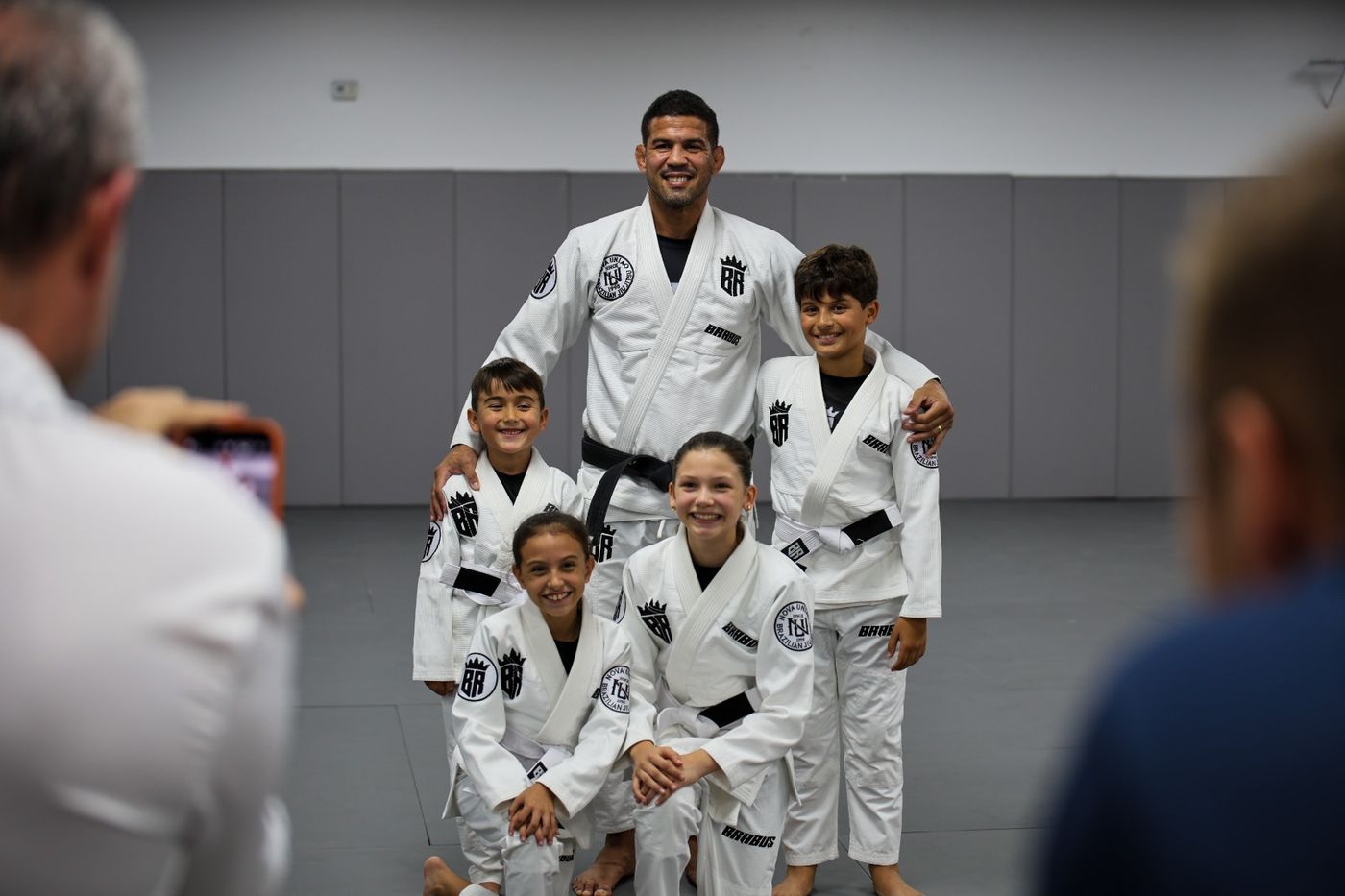
How BJJ Teaches Kids to Handle Conflict and Respect Others
Every jiu-jitsu class runs on a small, consistent social contract — bow in, work with a partner, tap when you need to, reset, go again. That contract teaches kids more about handling conflict than almost anything else in their week.
Parents often sign a child up for jiu-jitsu expecting physical benefits — coordination, fitness, maybe some self-defense skills. What frequently surprises them is how much the mat ends up shaping their child's social behavior: how they handle disagreement, how they treat people they've just met, and how they respond when something doesn't go their way. None of that is accidental. It's built into the structure of every class.
Bowing in: a small ritual with a real purpose
Most jiu-jitsu classes open and close with some form of bowing — to the coach, to training partners, sometimes to the mat itself. It looks like a formality, but it functions as a reset switch. Bowing in marks a clear line: whatever happened before this moment (an argument with a sibling, a rough day at school) stays outside the mat, and what happens on the mat starts here, with attention and respect for the people around you. Kids who do this twice a week internalize something valuable — that you can walk into a shared space and choose to show up with respect regardless of your mood.
Partner drilling: negotiating with someone bigger, smaller, or just different
A huge portion of a kids' jiu-jitsu class is spent working technique with a partner — someone who is sometimes a close friend, sometimes a kid they've never spoken to, and often a different size or skill level entirely. This is where a lot of quiet social learning happens. Kids learn to communicate directly ("Can we try that again slower?"), to adjust their effort based on who they're working with, and to treat a training partner's safety as part of their own responsibility. A bigger kid learns to control their strength around a smaller one. A less confident kid learns to speak up when something isn't working. Coaches actively reinforce this — a child who is rough with partners or unwilling to work with certain kids gets redirected quickly, because the training relationship depends on mutual trust.
Tapping out: losing without it being a big deal
Tapping — signaling "I'm caught, let's reset" — is maybe the single most valuable habit jiu-jitsu builds in kids, and it has almost nothing to do with fighting. It's a structured, low-stakes way to practice losing. A child taps, the position resets, and everyone moves on immediately — no lingering embarrassment, no argument about whether it counted. Many coaches and child development professionals note that kids who get regular, low-pressure practice losing small contests tend to handle disappointment and setbacks with more composure elsewhere, because they've built the habit of recovering quickly instead of spiraling.
Compare that to a lot of other conflict a child faces — a disagreement with a friend, a bad grade, getting left out of something. There's rarely a clean, immediate reset available. Jiu-jitsu gives kids dozens of reps a week at exactly that skill: something goes wrong, you acknowledge it, and you get back to neutral fast.
Respect that isn't just a rule on the wall
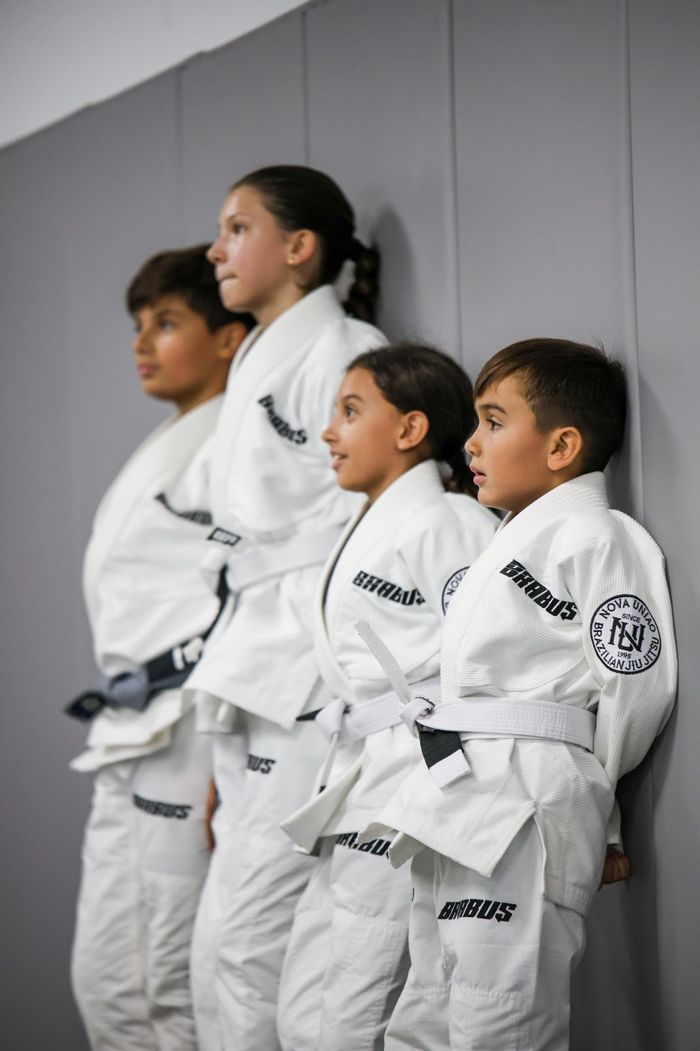
A lot of environments tell kids to "be respectful" as an abstract instruction. Jiu-jitsu makes it concrete and immediate, because disrespecting a partner — going too hard, ignoring a tap, showing off at someone else's expense — has a direct, felt consequence on the mat. Kids figure out quickly that the room works better, and training is more fun, when everyone treats each other well. That's a lesson learned through repeated experience, not a lecture, which tends to make it stick.
Where it shows up outside the gym
Parents and coaches commonly report seeing this transfer into daily life — a child who handles losing a board game with less of a meltdown, who's quicker to apologize and move on after a squabble with a sibling, who shows more patience working with a partner on a group project at school. None of this is guaranteed or automatic, and jiu-jitsu isn't a substitute for the ordinary work of parenting and teaching kids to manage emotions. But a consistent structured environment that rewards respect and resets after conflict gives kids real, repeated practice at skills that otherwise only come up occasionally and unpredictably.
Curious what this looks like in person? Explore the Kids & Teens program at Brabus Academy, or book a free trial class and watch a session for yourself.
Come find out what you're made of.
No experience required. No commitment. Just step on the mat.
Start Free Trial